
There is a category of photographs that exists in a strange place – the ones that almost were not taken at all. The ones where every instinct said not yet, not me, I am not ready for this. And yet you picked up the camera anyway, and something happened that you have been thinking about ever since.
I have a lot of those. More than I expected when I started looking back at the work that has shaped my career. And almost every one of them started with hesitation – with a reason that felt completely legitimate at the time for why I should not be the one to take that photograph.
The session I almost walked away from
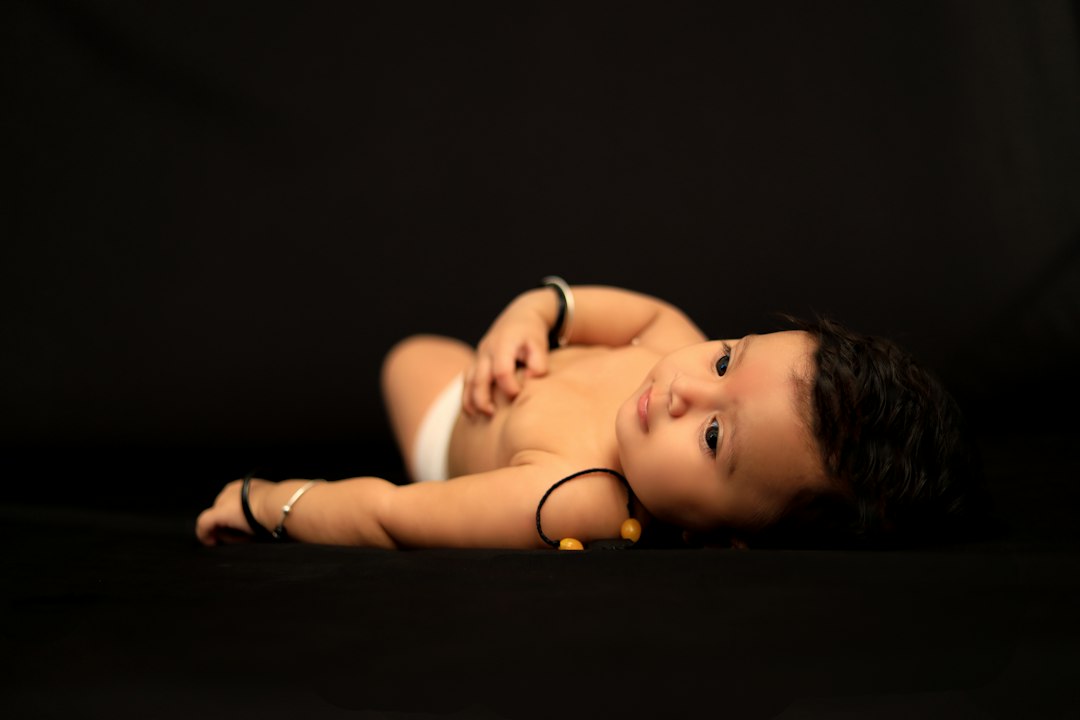
Twenty years ago, I was asked to photograph a newborn. This should sound unremarkable – I am now a master newborn photographer with two decades of experience in this specialty. But at the time, I had not shot a single newborn session. I did not have a baby. I had never spent much time around infants. I had no idea what I was doing, and I was genuinely scared.
The fear was specific and real: I did not know how to handle a newborn safely. I did not know what poses were even possible, let alone how to get a baby into them. I did not know how a newborn would behave during a session, how long they could be awake, what sounds or movements would upset them. I knew almost nothing, and the thing I was being asked to photograph was a fragile new human being.
I did the session anyway. I pushed through the nervousness, showed up, and did my best with what I knew at the time.
Twenty years later, newborn photography is one of the deepest parts of my practice. I have photographed thousands of families in those first days and weeks of a baby’s life. I understand how to keep a newborn safe, how to read what they need, how to create images that families will have for the rest of their lives. None of that would exist if I had let the fear make the decision for me that first time.
Why fear feels like good judgment
Here is the thing about the fear that shows up before a challenging session: it feels exactly like wisdom. It presents itself as practical caution – you are not ready, this is not the right time, you do not have the skills yet. And sometimes that is true. There are absolutely situations where the right answer is to say I need more preparation before I do this.
But more often, the fear is not actually about your skill level. It is about discomfort with uncertainty. You do not know exactly how it will go. You cannot guarantee the outcome. You might fail in front of someone who trusted you. That is terrifying in a way that has very little to do with whether you are actually capable.
The photographers who grow most consistently are the ones who have learned to tell the difference between those two things. Is this genuine unreadiness that needs more preparation, or is this discomfort with uncertainty that will never fully go away no matter how much I prepare? The first deserves attention. The second needs to be walked through, not waited out.
Why I never hesitate to press the shutter
I want to be honest about something: I do not hesitate much anymore before pressing the shutter. Not because I have eliminated doubt or uncertainty, but because I understand something about photographs that took years to fully internalize.
A photograph captures a moment that will never exist again. The way the light is falling right now, at this particular angle, on this particular face, in this particular expression – that is gone in a fraction of a second. You either take the photograph or you do not, and once you have decided not to, that moment has already passed. There is no going back and getting it.
That knowledge changes how I respond to hesitation. When I feel the pull not to take a shot – not sure it will work, not sure the light is right, not sure I am in the right position – I weigh it against what I know: this will not happen again. And that almost always tips the decision toward pressing the shutter. I can always delete a photograph. I cannot take one I missed.
The importance of capturing a memory – really understanding the permanence of what you are preserving when you take a photograph – is what keeps me from second-guessing in the moment. The people in front of my camera will not be this age again. This moment will not recur. The photograph either exists or it does not.
The photographs you are not taking
I want to ask you something directly: what photographs are you not taking right now?
Not the sessions that are genuinely out of reach – the ones that require equipment you do not have, access you cannot get, skills that realistically need another year of development. I mean the ones where the hesitation is mostly fear. The portrait session you keep putting off because you are not sure your lighting is strong enough. The documentary project you have been planning for two years that you have not started because the timing never feels quite right. The specialty you are curious about but have not tried because you do not know what you are doing yet.
Those are the photographs that shape careers. Not the ones that go exactly as planned with a client you are comfortable with in a setting you know well – those are valuable, but they are not where growth happens. Growth happens in the session you were not sure you were ready for.
What to do with the hesitation
I am not suggesting you ignore fear entirely – some of it is useful. What I am suggesting is that you examine it a little more carefully than you might normally do.
Ask yourself: what specifically am I afraid of? Name it as precisely as you can. Not ready is not specific enough. What does ready look like? What would you need to know or have or be able to do that you do not currently have? When you get that specific, one of two things happens: you realize the gap is real and you have a concrete thing to work on, or you realize the gap is mostly a feeling and there is no amount of additional preparation that would make it go away. Both of those answers are useful.
Then ask yourself what it costs to try anyway. For most photography sessions, the cost of a less-than-perfect outcome is manageable. You learn something, you refine your approach, you try again. The stakes are rarely as high as the fear makes them feel.
And then ask what it costs not to try. Because that cost is real too. The specialty you never explored. The project that never happened. The version of your work that you never found out you were capable of.
The career built on photographs you almost did not take
When I look back at the work I am most proud of, very little of it came from sessions where I felt completely ready and confident before I started. Most of it came from sessions where I showed up uncertain and made something anyway.
The newborn specialty I almost did not start. The documentary projects I did not know how to shoot when I began them. The client relationships that began with sessions that made me nervous. These are the foundations of a practice I am genuinely proud of, and they almost did not happen.
Your camera is the most important thing in your bag – but your willingness to use it when you are not sure it will work is what separates photographers who grow from photographers who stay comfortable. Comfortable is fine. It is just not where the interesting work is.
If you are in a place where fear is making decisions your talent and drive should be making, mentoring can help with that. I work one on one with photographers to help them build clarity, confidence, and a practice that is actually going somewhere. Learn more at Savvy Shutterbug mentoring.
Frequently asked questions
How do I know if my hesitation is fear or genuine unreadiness?
Ask yourself what specific thing you would need to know or be able to do before you feel ready. If you can name it concretely, it is probably a real gap worth addressing. If the answer is vague – I just need more practice or I am not sure – it is more likely fear of uncertainty than a skills deficit. Fear of uncertainty does not go away with more preparation; it has to be walked through.
What if I take a session I am not ready for and it goes badly?
Define goes badly. If the images are not as strong as you hoped, that is a learning experience, not a disaster. If a client is unhappy, that is harder – but most clients appreciate effort and honesty, and a photographer who is genuinely trying and growing is more likely to earn a second chance than you think. The sessions that go imperfectly and teach you the most are often the ones that move your work forward the fastest.
Is there ever a good reason not to take a photograph?
Yes. Ethical reasons – a moment that is not yours to capture, a person who has not consented, a situation where the act of photographing would cause harm. Technical reasons, rarely – a piece of gear that is truly not up to the job. But I am not sure it will work and I might not be the right person for this almost never hold up as reasons. Try the photograph. Find out.
Related posts
How to Measure Your Own Photography Progress (Without Comparing Yourself to Anyone Else)
Finding Your Photography Niche
Overcoming Creative Blocks in Photography