
There is a specific kind of heaviness that shows up when something you chose for joy starts feeling like an obligation.
Photography was supposed to be the thing you loved. The thing you did for yourself. The creative practice that gave you something the rest of your life did not. And now you are looking at your camera and feeling — nothing. Or worse, feeling a low-grade dread about picking it up.
This happens to almost every photographer at some point. And when it happens, the instinct is often to push through it, to force yourself to shoot, to treat the loss of joy as a discipline problem that requires more effort.
That instinct is almost always wrong.
What Is Actually Happening
When photography stops feeling fun, it is usually one of a few things happening underneath the surface.
The most common is pressure accumulation. Somewhere along the way the practice acquired expectations that were not there at the beginning. The expectation that every session produces something good. The expectation that your work should look a certain way by now. The expectation that you should be further along. When those expectations are present, every session becomes a test rather than an exploration. Tests are not fun. Exploration is.
A second common cause is comparison fatigue. If you have been spending significant time looking at other photographers’ work and measuring your own against it, the cumulative effect is a kind of demoralization that drains the pleasure out of making images. You stop shooting toward what you love and start shooting toward what you think you should be producing. That disconnection from your own creative instinct makes the practice feel hollow.
A third is simply depletion. You have been outputting — shooting, editing, reviewing, trying — without enough input. Without enough time looking at photography that moves you, enough time away from the camera, enough time in environments that fill you up rather than ask something of you. Creative depletion is real and it does not respond to more effort. It responds to rest and input.
What Does Not Help
Forcing yourself to shoot when the joy is gone rarely helps and often makes it worse.
A session taken from a place of obligation produces images that feel obligatory. The flatness shows up in the work. And coming home from a joyless session to joyless images reinforces the belief that something is fundamentally wrong rather than temporarily off.
Setting ambitious goals — a thirty-day challenge, a commitment to post every day, a project with a tight deadline — in response to a loss of motivation is another approach that rarely works. The structure can feel like it will create momentum. What it usually creates is more pressure on a practice that already has too much.
Buying new equipment is tempting when the joy is gone. New gear provides a temporary hit of excitement that can feel like renewed motivation. But the joy that equipment produces is thin and it fades quickly when the underlying issue has not been addressed.
What Actually Helps
The most effective thing when photography stops feeling fun is to radically lower the stakes.
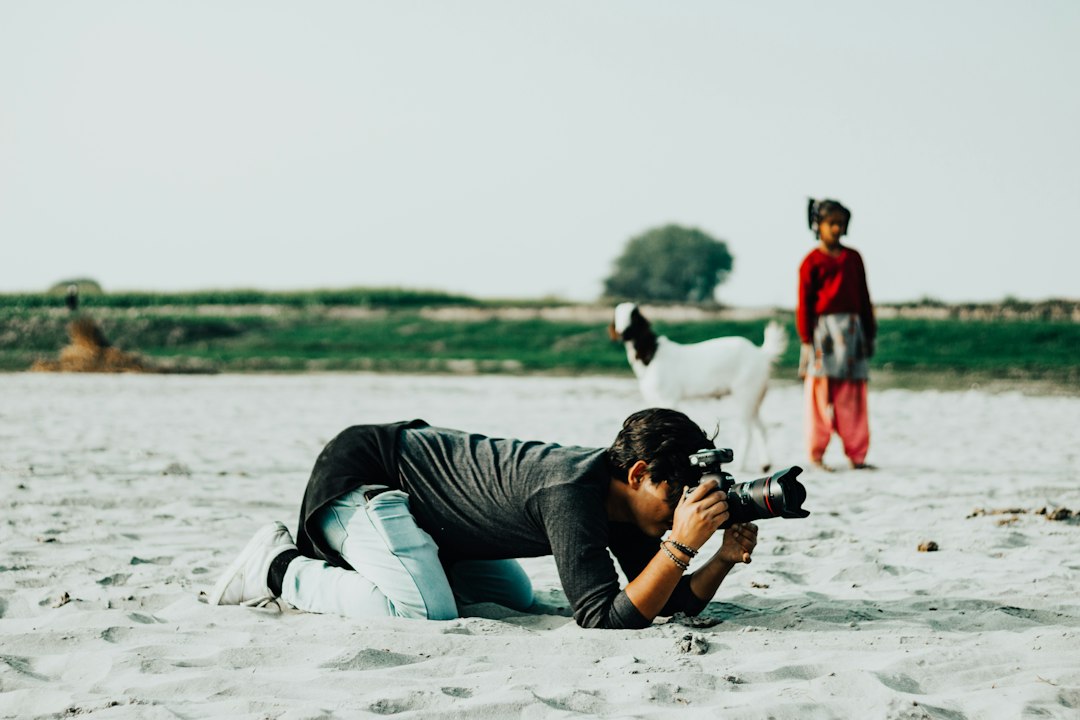
Not a formal session. Not a specific project. Just picking up the camera with no agenda and walking somewhere you find interesting. No expectation of producing anything good. No obligation to share what you make. Just you and the camera and whatever happens to be there.
That kind of no-pressure shooting often produces the most unexpected results — not because low pressure is a technique, but because low pressure removes the interference that was getting in the way of genuine seeing. When you stop trying to make something impressive and just let yourself look, the looking often becomes interesting again.
Returning to what originally moved you also helps. Not imitating it — returning to it. If you fell in love with photography because of the way late afternoon light fell through your kitchen window, go spend an afternoon with that light again. Not to make a portfolio image. Just because it was beautiful once and it probably still is.
Looking at photography you love — books, galleries, photographers whose work has always moved you — without comparing it to your own work refills something that sustained effort depletes. Input matters as much as output and most photographers in this situation have the ratio backwards.
When the Joy Does Not Come Back Quickly
If you have tried these things and the joy is still not there — if weeks or months have passed and photography still feels flat — it is worth asking a more direct question.
What specifically changed? Was there a session that went badly and left a residue? A comparison that landed harder than it should have? A goal that was not met and quietly became evidence that you are not good enough? A period of real life stress that got layered onto the practice?
Sometimes the loss of joy has a specific cause that can be named and addressed. Sometimes it is diffuse and harder to locate. But in both cases, having a direct conversation with someone who can look at your specific situation — what you are experiencing, what you were hoping photography would be, where it went sideways — tends to move things faster than solo troubleshooting.
That is not a weakness. That is just how creative development works. It does not always happen in isolation, and it does not have to.
The joy that brought you to photography in the first place is not gone. It is underneath whatever accumulated on top of it. And it is worth going to find it.