
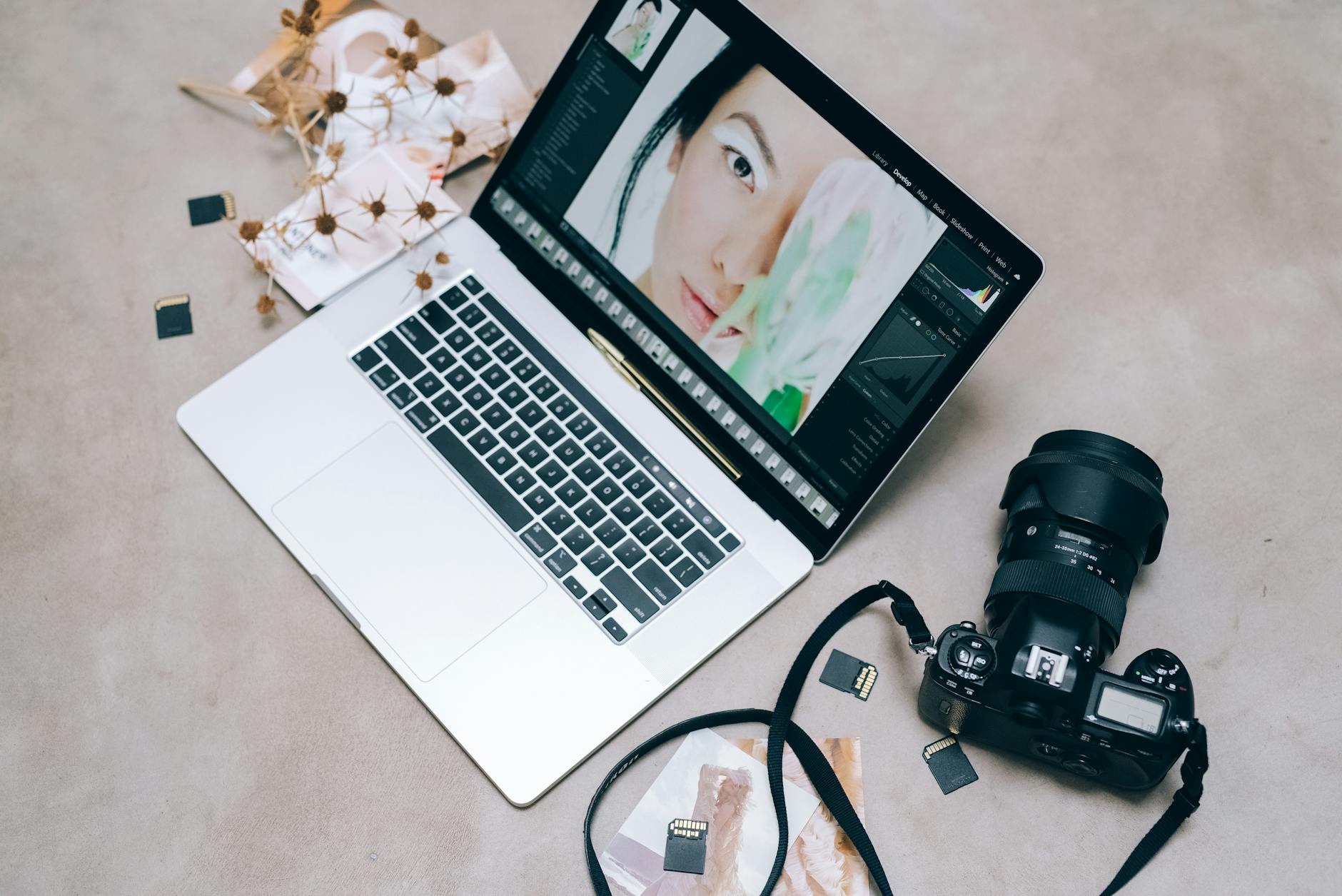
Editing is often framed as a corrective process.
You take the photos, then you fix them. Fix the exposure. Fix the white balance. Fix the distracting element in the background. Take what the camera produced and bring it up to an acceptable standard.
That framing is not wrong exactly. Correction is part of editing. But it describes only the most mechanical layer of what editing can be when it is done thoughtfully.
Intentional editing is something different. It is the continuation of a creative decision that began before you pressed the shutter — the completion of an intention rather than the repair of an accident. And the difference between corrective editing and intentional editing shows up clearly in the final images.
The Difference Between Correcting and Completing
Corrective editing asks: what is wrong with this image and how do I fix it?
Intentional editing asks: what was I trying to communicate with this image and how do I bring the edit closer to that?
Those are different questions with different processes and often different results.
When you edit correctively, your reference point is technical adequacy. Correct exposure. Neutral color balance. Clean shadows. Adequate sharpness. The goal is for nothing to be wrong.
When you edit intentionally, your reference point is the original vision. The warmth of the afternoon light that made you press the shutter. The quiet mood of the scene. The energy of the moment. The goal is for the image to communicate what you experienced — which may mean editing toward something that is technically imperfect but emotionally right.
A portrait that is slightly underexposed but retains the intimate, moody quality of the original light may be more true to the intention than one that has been brightened to correct exposure at the cost of the atmosphere. A landscape with slightly blown highlights in a sunset sky may honor the experience of that light more honestly than one where the highlights have been aggressively recovered to show technical control.
Intentional editing makes these distinctions because it is oriented toward meaning rather than toward correctness.
Editing Starts at the Camera
The foundation of intentional editing is laid before you open an editing application.
When you shoot with intention — when you make deliberate decisions about light, about composition, about timing — you give the edit a starting point that has real direction. The image arrives in post-processing with an embedded intention. The editing process is then about honoring and completing that intention rather than trying to reverse-engineer meaning from an image that was shot without a clear purpose.
This is why the connection between intentional shooting and intentional editing is so direct. Photographers who shoot thoughtfully edit more easily and more clearly. The decisions they made at the camera give them a clear brief for the editing process. They know what they were going for. They can see whether the edit is moving toward it or away from it.
Photographers who shoot reactively and sort later often find editing more labored. They are trying to identify the intention retroactively — to find the image’s meaning in post rather than confirming it. Sometimes this works. Often it produces editing that feels uncertain because the foundation was uncertain.
Developing a Consistent Editing Voice
One of the outcomes of intentional editing, practiced consistently over time, is a recognizable editing voice. A way of treating images that is distinctly yours — not because you applied a preset someone else built, but because your editing reflects your consistent creative decisions about tone, color, contrast, and mood.
Editing voice develops through making deliberate choices repeatedly rather than through variety for its own sake. The photographer who edits every session differently, chasing trends or experimenting widely, does not develop a voice. The photographer who makes consistent, considered decisions — who returns to similar tonal relationships, who treats color in a characteristic way, who has a defined approach to shadow and highlight — develops a visual identity that is recognizable across different subjects and conditions.
This consistency is not limiting. It is identifying. It is what makes a body of work look like it came from one deliberate mind rather than from a series of unconnected technical exercises.
The Practical Side of Intentional Editing
Intentional editing does not require extensive technical knowledge. It requires a clear question and the honesty to keep asking it.
Before you make any adjustment, ask: what is the mood of this image and what edit serves that mood? A bright, clean, high-key edit suits a different kind of image than a warm, slightly dark, intimate one. The technical adjustments — exposure, contrast, color grading, tone — are all tools for serving that mood. If you start with the mood question, the technical decisions tend to follow more naturally.
When you finish an edit, step back and ask: does this image feel like what I experienced? Not does it look technically correct — does it feel right. If the answer is no, identify what is off. Is it the color temperature? The contrast? The brightness? Work toward feeling rather than toward technical criteria alone.
Develop the habit of comparing your edit to the original in-camera image and asking what changed and why. Not all changes are improvements. Sometimes the camera captured something closer to the intention than the edited version did. Being able to recognize that — to edit less rather than more when the image already has what it needs — is itself a form of intentional editing.
What Intentional Editing Is Not
It is worth being clear about what intentional editing does not mean.
It does not mean heavy processing. Some of the most intentional edits are the lightest ones — small adjustments that bring an image to where it already wanted to be. Intentionality is about the clarity of the decision, not the magnitude of the change.
It does not mean ignoring technical issues. If an image has a white balance problem that distorts the mood, correcting it is part of serving the intention. Technical and creative editing are not opposites.
It does not mean never using presets. A preset is a starting point. If you apply a preset and then adjust it toward the specific mood of the specific image, that is intentional. If you apply a preset uniformly to everything without consideration, that is efficient but not intentional.
Intentional editing is ultimately about ownership — about the editing process being an expression of your creative decisions rather than a mechanical step between shooting and delivering.
If you want to develop the full arc of intentional photography — from the decisions made before a shoot through the editing that completes the creative process — the free guide Photograph With Purpose gives you a structured framework for exactly that. It is built around the idea that photography at its most powerful is a sequence of deliberate decisions, and that each one matters.
Edit with intention. Complete what you started when you pressed the shutter.