
I have been shooting film and digital side by side for most of my career. Not as an experiment, not as a trend — just because film was how I started, and I never found a reason to fully walk away from it. Thirty years later, I still haven’t.
People sometimes ask me if I think film is better. That is not really the right question. Film and digital are different tools that produce different kinds of attention in the photographer. What I know is that film shaped the way I see in ways I could not have gotten any other way — and that those lessons have made me better with a digital camera too.
Here is what three decades of shooting both taught me.
Film taught me to slow down and really look
When you load a roll of 35mm film, you have 24 or 36 exposures. That is it. You cannot delete and reshoot. You cannot check the back of the camera and adjust. Every frame costs something — money, yes, but more than that, it costs intention.
That constraint changed how I looked at everything before I pressed the shutter. I started asking myself: what is the point of this photo? What is the story? What am I seeing in this frame that I need to tell the world? You could not afford to fire off ten frames and hope one worked. You had to get the story into one frame and make it count.
Film also forced me to study light in a completely different way. Before every shot I was asking myself: where is the light coming from? How is it falling on my subject? Will this translate the way I’m seeing it onto the film? Because unlike digital, you could not see the result until the roll was developed — sometimes days later. You had to train yourself to read light in real time and trust what you saw, before you ever knew if you got it.
I am grateful for every one of those limitations. They built something in me that no amount of digital shooting could have.
The roll I will never forget
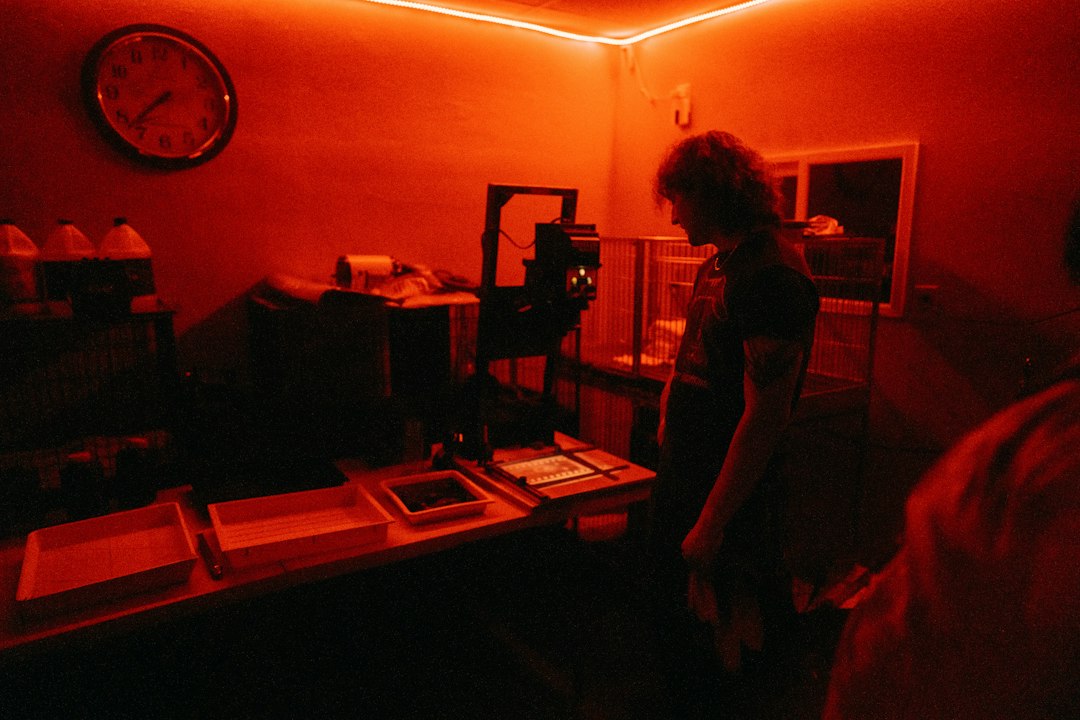
There is one roll of film I think about more than any other I have ever shot: my very first roll that I developed in the darkroom myself.
I remember taking the photos. I remember slowing down, really looking, seeing the shot before I took it. And then, standing at the developing tray in the darkroom, I watched the image come alive in front of me. The photo I had seen in my mind, the one I had worked to capture — it appeared in the developer, slowly, then all at once. The story manifested right there in my hands.
That was it for me. I was hooked. There is nothing like watching a photograph come to life in a developing tray. It is almost alchemical — you made this. You slowed down enough to witness something, you found the frame, and now here it is, real and physical and permanent. No delete button. No undo. Just the truth of what you saw.
That moment in the darkroom set the standard for everything I have shot since, on film or digital. Every frame should feel worth developing.
What digital photographers miss about film
The most common thing I hear from photographers who have never shot film is that it sounds hard, or intimidating, or inconvenient. And I understand that — it is slower, it costs more per frame, and you do not get instant feedback.
But here is what I want digital shooters to understand: film is not actually hard. What it requires is that you slow down. It requires that you approach photography as a true art form rather than a convenience — as something you do to capture truth and story, not just to produce a high volume of images and sort through them later.
Photography is art. Photography is truth. And capturing truth and story takes a photographer who is willing to slow down long enough to witness it. Film enforces that. Digital lets you bypass it — which means digital photographers have to build that discipline themselves, intentionally, without the constraint that used to build it automatically.
That is actually harder than just shooting film.
What film gave me that I carry into every digital session
I still ask myself the film questions before I press the shutter, even with a digital camera in my hands. What is the point of this photo? What is the story? What am I seeing that I need to capture? Where is the light and how will it read?
Those questions slow me down in the best possible way. They keep me from spraying frames and hoping. They keep me present with my subject — which is, ultimately, what produces images worth keeping.
I also carry the darkroom sensibility into editing. When I sit down with a digital file, I am thinking about what I was trying to say with that image when I took it. I am trying to develop what I saw, not manufacture something I didn’t. Film taught me that the photograph was already there — my job was to witness it and bring it out.
Should you try shooting film?
If you have never shot a roll of film, I would genuinely encourage you to try it — not to become a film photographer, but to experience what limited exposures do to your attention. Load a roll of 24 exposures. Shoot it in a single day or outing. Make yourself think before every frame. See what that does to the way you look.
You do not need to develop it yourself (though if you ever get the chance to develop a roll in a darkroom, take it). Most cities still have a lab that processes 35mm. The cost is modest. What you get back — not just in the images but in what the process teaches you — is worth far more than the roll cost.
A 35mm film camera does not have to be expensive either. Many of the cameras I learned on can be found for very little money now. The barrier is smaller than most people think.
Frequently asked questions
Is film photography harder than digital?
Not harder — different. Film requires more deliberate attention before you press the shutter because you have limited frames and no instant preview. That deliberateness is actually a skill, and it is one most photographers benefit from developing regardless of what format they shoot.
Do I need a darkroom to shoot film?
No. You can drop your rolls at a lab and have them developed and scanned. Many photographers shoot film their whole lives without ever setting foot in a darkroom. That said, developing your own film and making prints is one of the most rewarding experiences in photography — if you ever get the chance, take it.
Will shooting film make me a better digital photographer?
In my experience, yes — but not because film is technically superior. It’s because the constraint of limited frames builds intentionality. That intentionality transfers. Photographers who have spent time shooting film tend to be more deliberate, more present, and more attuned to light than those who have only ever shot digital.
What film camera should a beginner start with?
A basic 35mm SLR from the 1970s–90s is an excellent starting point. Brands like Pentax, Minolta, and Canon all made reliable and affordable cameras in that era that you can find secondhand for very reasonable prices. A 50mm lens is all you need to start.
Related posts
What to Do When You Feel Like Your Photos Aren’t Good Enough
The Systems That Help Me Avoid Burnout
Year-End Reflection: How to Set Photography Goals