
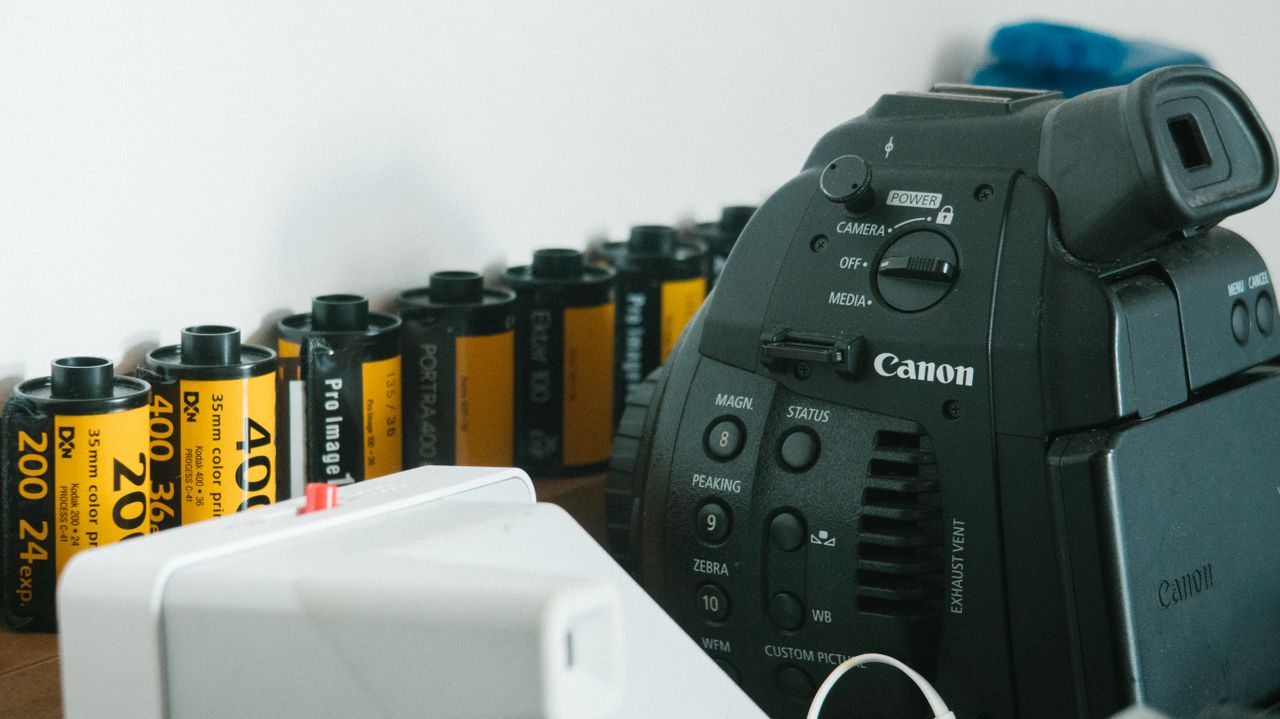
There is a moment in film photography that digital does not have.
You press the shutter. The image is made. But you cannot see it. It is there — recorded, held — but invisible. Somewhere inside the canister of film in your camera, something has happened that will eventually become a photograph. But right now it is just chemistry waiting.
That invisible moment is one of the things that makes film photography feel different from digital at a fundamental level. And understanding what is actually happening inside the camera after you press the shutter — the physics and chemistry of it — makes the whole process feel less like magic and more like something genuinely fascinating.
Here is what is actually going on.
The Film Emulsion
Before we get to what happens when you press the shutter, it helps to understand what film actually is.
A roll of 35mm film is a strip of plastic coated with an emulsion — a thin layer containing millions of microscopic silver halide crystals suspended in gelatin. Silver halide is a chemical compound that is sensitive to light. Different types of film contain different sizes and arrangements of these crystals, which is part of what determines how the film responds to light — its grain structure, its color rendering, its ISO speed.
ISO speed is directly related to crystal size. Larger crystals are more sensitive to light, which is why high ISO films can be used in low light but produce more visible grain. Smaller crystals are less sensitive, requiring more light but producing finer grain. When you choose your film at the camera shop, you are choosing a particular arrangement of chemistry designed to respond to light in a specific way.
The Moment of Exposure
When you press the shutter, a mechanical curtain inside the camera opens for a precisely controlled amount of time — the shutter speed — and allows light to reach the film.
That light, reflected from whatever you are photographing, passes through the lens and lands on the film emulsion. Where light hits the silver halide crystals, a chemical reaction begins. Photons of light strike the crystals and cause electrons to move, which changes the crystals at a molecular level. The crystals that received light are now chemically different from the ones that did not.
What you have at this point is called a latent image. It is invisible to the naked eye — there is nothing to see yet on the film — but the information is encoded in the changed state of those silver halide crystals. The difference between the crystals that were exposed to light and those that were not is the record of your photograph, waiting to be made visible.
This is what exists when you advance the film and keep shooting. A series of latent images, each one a moment of light recorded in chemistry, invisible but real.
The Development Process
When you finish the roll and send it to the lab, the development process makes those latent images visible.
In a darkroom — in complete darkness or using a light-tight developing tank — the film is submerged in a chemical developer solution. The developer reacts with the silver halide crystals that were exposed to light, converting them into metallic silver. The more light a crystal received, the more completely it converts. The areas of the film that received the most light produce the most metallic silver. Areas that received no light are unchanged.
At this stage, the image is a negative — areas that were bright in the original scene are dark on the film, and areas that were dark are light. The colors, if shooting color film, are also inverted into their complementary opposites.
A fixer solution is then applied, which removes the unexposed, undeveloped silver halide crystals from the emulsion and stabilizes the developed image. After washing and drying, what you have is a developed negative — a permanent, stable record of the light that entered your camera at the moment you pressed the shutter.
Color Film Adds Another Layer
Black and white film forms its image entirely from metallic silver, which is why developed black and white negatives have that distinctive silvery quality when you hold them up to the light.
Color negative film is more complex. In addition to silver halide crystals, color film contains dye couplers — chemical compounds that react during development to form colored dyes in the emulsion. The film has three layers, each sensitive to a different part of the color spectrum: one for red light, one for green, one for blue.
During development, as the silver forms in each layer, the dye couplers react and form dyes in the complementary colors — cyan, magenta, and yellow. A bleach step then removes the metallic silver entirely, leaving only the color dye image. This is why developed color negatives have those characteristic orange-ish tones — the orange mask built into the film base is designed to improve color accuracy in printing and scanning.
The Scan That Brings It to You
When the lab scans your negatives, a high-resolution digital scanner reads the density and color information in each frame and converts it into a digital image file. The colors are inverted back to positive, and what you see on your screen is the photograph — the light that entered your camera, converted to chemistry, converted back to digital information.
That chain of conversions, from light to latent image to developed negative to digital file, is why film photographs have a quality that digital captures differently. The chemistry introduces variation, texture, and a response to light that is organic rather than calculated. The grain is real — actual silver crystals or dye clouds — not a mathematical approximation of noise.
Why This Matters for How You Shoot
Understanding the process changes something about how you approach pressing the shutter on a film camera.
You are not taking a photo. You are initiating a chemical reaction. You are exposing silver halide crystals to light and trusting that the invisible record they hold will eventually become something worth seeing.
That understanding — that the image exists before you can see it, that it is real and permanent from the moment the shutter closes — creates a different relationship to the act of photographing. It is why film photographers talk about committing to a frame. Because you actually are committing. The chemistry does not undo.
If you are curious about trying film and want a simple starting point for getting your first roll through a camera, the free 35mm Starter Checklist covers the practical side — what film to buy, how to prepare your camera, and how to get your roll developed. The chemistry happens on its own once you press the shutter.
That part is taken care of.