
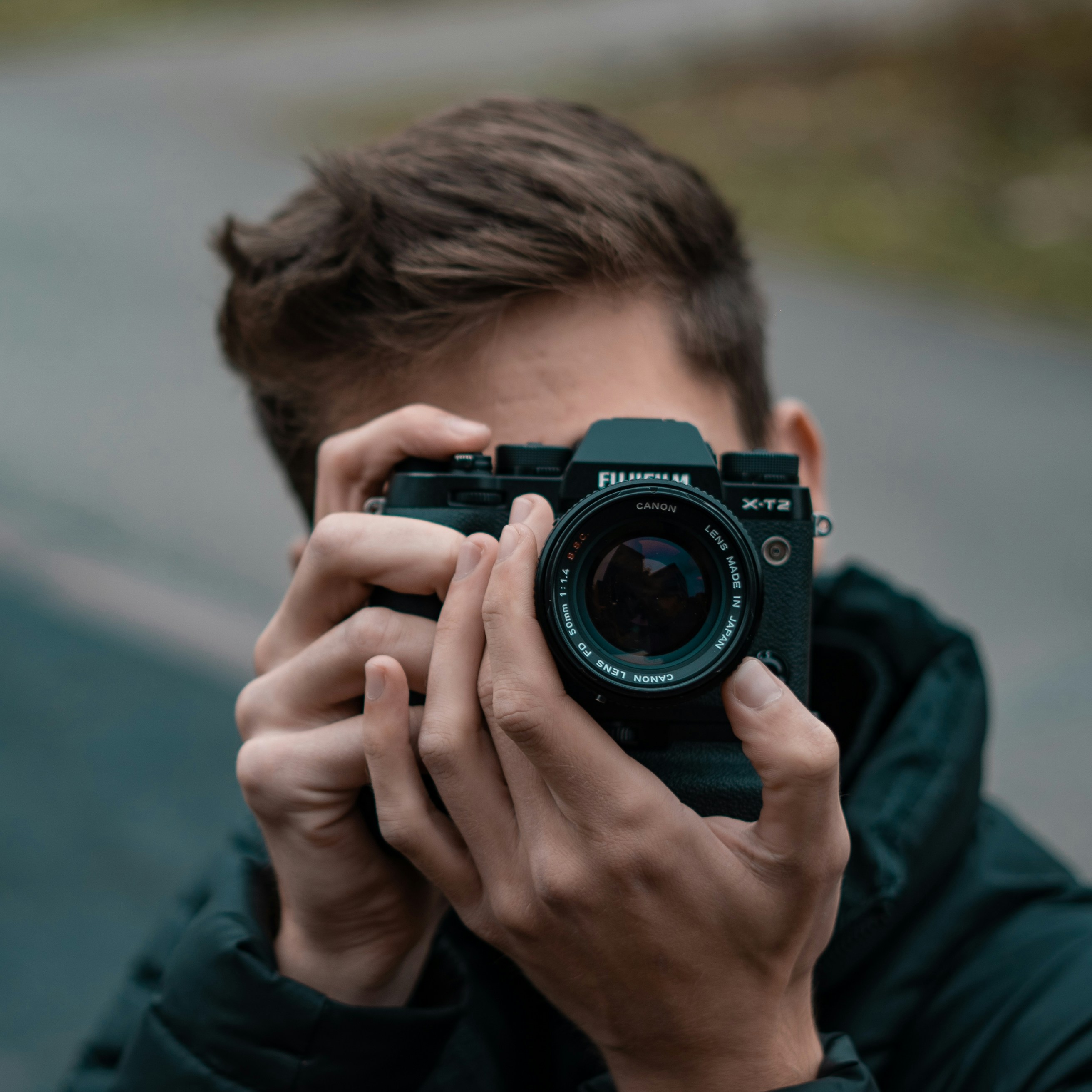
Ask most photographers to identify their favorite image from the last year and then ask them how it happened.
The answer is almost never: I planned it carefully, I set up the perfect conditions, I worked really hard and the effort paid off.
It is usually something more like: I was not really thinking about it, I just saw it, I pressed the shutter. I almost did not take that one. I was not even trying to make a great photo in that moment.
This pattern is consistent enough that it is worth paying attention to. The images photographers are most proud of tend to arrive not from maximum effort but from a specific quality of relaxed attention. And understanding why that happens can change how you approach your practice.
What Happens When You Try Too Hard
When you are consciously trying to make a great photograph — when that intention is active and present in the front of your mind — it interferes with the part of your brain that is actually doing the seeing.
You start second-guessing compositions before you commit to them. You become aware of the camera in your hands in a way that makes you slightly self-conscious. You start evaluating potential frames as you see them rather than simply responding to them. The gap between seeing and shooting widens.
You also start chasing a predetermined idea of what the image should be rather than staying open to what is actually there. You have decided in advance what a great photograph looks like and you are trying to find it rather than finding what is in front of you.
That is a subtle but significant difference. Photography at its best is responsive. It meets what is there rather than imposing a vision onto it. When you are trying too hard, you are imposing rather than responding, and the images show it.
What the Research Says and What Experience Confirms
There is a concept in psychology called the flow state — a condition of focused, effortless engagement where skill and challenge are in balance and conscious self-monitoring drops away. Athletes describe it. Musicians describe it. Writers describe it. Photographers describe it too, though usually with different words.
In the flow state, performance typically improves not because you are trying harder but because the self-consciousness that normally interrupts performance is absent. You are not thinking about whether you are doing it right. You are just doing it.
The conditions that produce flow in photography are not mysterious. You need enough technical fluency that the camera settings are not consuming your attention. You need a subject or environment that genuinely interests you. And you need to release the specific intention of making a great photograph and replace it with the simpler intention of paying attention.
That last one is the hardest part for most photographers to do deliberately.
The Role of Technical Fluency
One reason experienced photographers make their best images without trying so hard is that technique has become automatic.
When you are still consciously thinking about aperture and shutter speed and ISO — when those decisions require active mental effort — there is less cognitive bandwidth available for seeing. Your attention is split between the technical operation of the camera and the scene in front of you.
As technique internalizes, that split closes. The technical decisions happen without consuming conscious attention. Your mind is free to simply look.
This is why I tell students that we are not chasing technically correct exposure. We are learning to use the tool the way you see the world. The technical side has to get out of the way so the seeing side can do its job. And the technical side only gets out of the way through repetition.
If your best images happen when you stop trying so hard, part of what is happening is that the technical demands of that moment happened to fall within what you could handle automatically, leaving your full attention available for the scene.
What Deliberate Practice Has to Do With It
Here is the part that might seem counterintuitive: the way to get more of those effortless moments is through more deliberate practice.
Not trying harder in the moment. Practicing more intentionally outside of it.
Every session where you consciously work on a specific skill — reading light, selecting focus deliberately, timing a moment, composing with the background in mind — is building the fluency that allows that skill to become automatic. And each thing that becomes automatic is one less thing consuming conscious attention in the moments that matter.
The best photographs do not happen in spite of practice. They happen because of it. The practice creates the conditions for the effortless moments by removing the friction that would otherwise prevent them.
How to Create the Conditions
You cannot force the effortless state. But you can create better conditions for it.
Shoot subjects and environments that genuinely interest you. Genuine interest produces a quality of attention that manufactured interest does not. When you care about what is in front of you, seeing happens more naturally.
Release the outcome. Go into a session with the intention of practicing a specific skill or simply paying attention to something specific — light, or timing, or the relationship between subject and background. Not with the intention of making a great photograph. The great photograph is more likely to happen when it is not the direct object of pursuit.
Know your camera well enough that it is not a barrier. If you are fumbling with settings or unsure what your camera will do in a given situation, that uncertainty occupies attention that should be on the scene. Know your tool.
And give yourself permission to make bad images. The pressure of trying to produce something good is often exactly what prevents it. The sessions where you feel free to make bad images are often the sessions where the unexpectedly good ones appear.
If you want a framework for building the kind of intentional practice that creates more of these conditions — exercises that build specific habits of attention and technique so that the effortless moments happen more often — the free guide Photograph With Purpose is built exactly for that. It gives you structure without adding pressure, which is the balance that actually works.
Your best photographs are already in you.
Stop trying so hard to find them and start creating the conditions where they can show up