
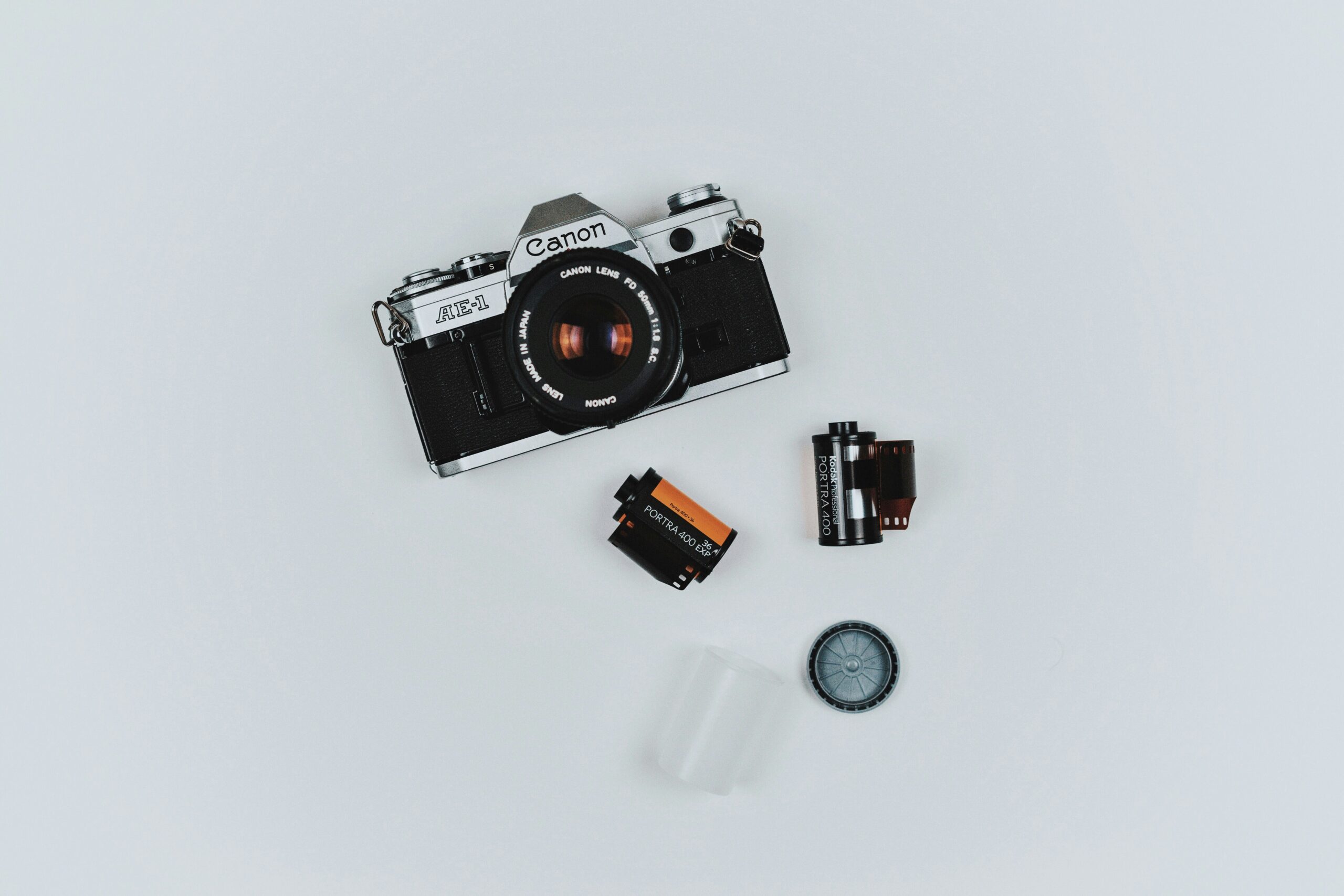
Something is happening in photography right now and it is not a trend in the way trends usually work.
Trends come from marketing. They get pushed by brands and algorithms and influencers who need something new to talk about. They spike, they peak, they disappear. The photographers who chased them look back a year later and wonder why they bought that preset pack.
What is happening with film photography is different. It is coming from photographers themselves — from people who are tired of something and going looking for something else. That kind of movement has different roots and different staying power than a trend.
I started in film. Spent years shooting it, developing it, and standing in a darkroom watching images emerge in the developer tray before digital changed everything. I have been shooting for over twenty-five years and I have worked on both sides of that shift — which means I understand what film gives you that digital doesn’t, not as a theory, but from direct experience. Watching photographers find their way back to film now, or discover it for the first time, is one of the more interesting things happening in the craft I have loved my entire adult life.
So let me tell you why I think it is happening, and why it makes complete sense.
The World Is Full of Perfectly Generated Nothing
If you have been paying attention to what AI image generation has done to the visual landscape in the last few years, you already understand part of the answer.
We are swimming in images that are technically flawless and emotionally empty. Generated portraits with perfect skin and perfect light and eyes that are almost right but not quite. Landscapes that could not exist anywhere on earth, rendered with a precision that real cameras cannot match. Stock imagery that has been replaced by prompts typed into a machine.
It is impressive technology. It is also, for a lot of people who care about photography as a craft, deeply unsatisfying to look at. Because you cannot feel the photographer behind it. There is no decision, no moment, no eye that saw something and chose to capture it.
When everything around you is being generated, the things that are genuinely made by human hands and human eyes start to carry a weight they did not have before. Film photographs carry that weight. You can feel it in them — the grain, the slight imperfection, the color that no preset quite replicates because it came from actual chemistry reacting to actual light.
That is not nostalgia. That is a real quality that digital photography, for all its advantages, has a harder time producing.
Film Slows You Down in the Best Way
Here is something I tell my students. The camera is your tool for telling the world how you see it. But if you are firing three hundred frames and sorting later, you are not really telling the world anything. You are hoping something lands.
Film does not let you do that. You have thirty-six frames on a roll, sometimes fewer, and every one of them costs money to shoot and process. That constraint changes how you look at a scene. You start actually looking before you raise the camera. You think about the light. You think about the moment. You wait.
That waiting is not a limitation. It is the practice.
I know what that shift feels like because I lived it in reverse — learning on film first meant that patience and intention were baked into how I shoot before I ever picked up a digital camera. The darkroom reinforced it further. When you are standing in the dark waiting for a print to develop in the tray, you are very aware of every decision you made out in the field. There is nowhere to hide from a bad exposure or a missed moment. That accountability changes you as a photographer.
I have watched students pick up film cameras for the first time and something visibly shifts in how they move through a scene. They slow down. They stop and look. They make a decision before they press the shutter. Those are exactly the habits that make someone a better photographer on any camera, digital or film.
The Results Are Genuinely Different
There are people who will tell you that you can replicate the film look in Lightroom. You can get close. You cannot get there.
I have processed enough film and spent enough time in a darkroom to tell you that with some confidence. Film has a response to light that is organic and unpredictable in the best sense. The grain is not digital noise — it has a structure and a texture that feels different when you look at it. The colors have a relationship with each other that comes from the chemistry of the emulsion, not from a color grading curve. The highlight rolloff — the way bright areas transition into the lighter parts of the frame — is something that digital sensors handle differently, and most people respond to film’s version without being able to name why.
Beyond the technical qualities, there is a relationship between the photographer and the final image that is different with film. You cannot chimp — you cannot look at the back of the camera after every frame and adjust. You shoot, you wait, and then you see what you got. That delay changes how you experience your own photographs. You remember the moment differently. The image arrives as something separate from the shooting rather than a continuous stream of previews.
For a lot of photographers, that experience of receiving the developed images is genuinely exciting in a way that downloading a card has stopped being.
It Is Not About Going Backward
I want to be clear about something because I think there is a misconception about what shooting film means in 2026.
It does not mean rejecting digital. It does not mean being precious about process. It does not mean you need a darkroom or any particular level of commitment.
For most photographers who are coming to film now, it is an additional practice. A way of working that teaches something different and produces something different. A way of reconnecting with the craft side of photography at a moment when so much of the imagery around us has been disconnected from craft entirely.
You can shoot film on weekends and edit digitally during the week. You can run one roll through a camera on a walk and send it to a lab and see what comes back. You can start with a fifty-dollar camera from a thrift store and a five-dollar roll of film.
The barrier to entry is lower than people think. The learning curve is real but not steep. And what you learn from it comes back into every other aspect of how you photograph. I see it with my students every time.
Why Now Specifically
The timing of this moment makes sense when you understand what is happening culturally around photography.
People are hungry for authenticity in a way they have not been before, because manufactured content has become the default. They want to see photographs that have a human behind them — a real set of eyes that saw something and decided it was worth capturing. Film provides that in a way that is visible and felt.
There is also a generation of photographers who grew up entirely digital who are discovering film for the first time and experiencing it as something genuinely new rather than something old. For them it is not a return. It is a discovery. And discoveries carry an energy that changes how you engage with a craft.
Whatever brought you to this post — whether you are curious about film, thinking about trying it, or already shooting and wondering why it feels like something clicked into place — the momentum is real and the reasons behind it are solid.
I created the 35mm Starter Checklist from twenty-five years of experience with both film and digital — including real darkroom time — because I wanted beginners to have the starting point I wish someone had handed me. It covers what film to buy, what to know before you shoot, and how to get your roll developed without any of the guesswork. It is free and it is a good first step.
Film photography is having a moment because it deserves one.
The only question is whether you are going to be part of it.