
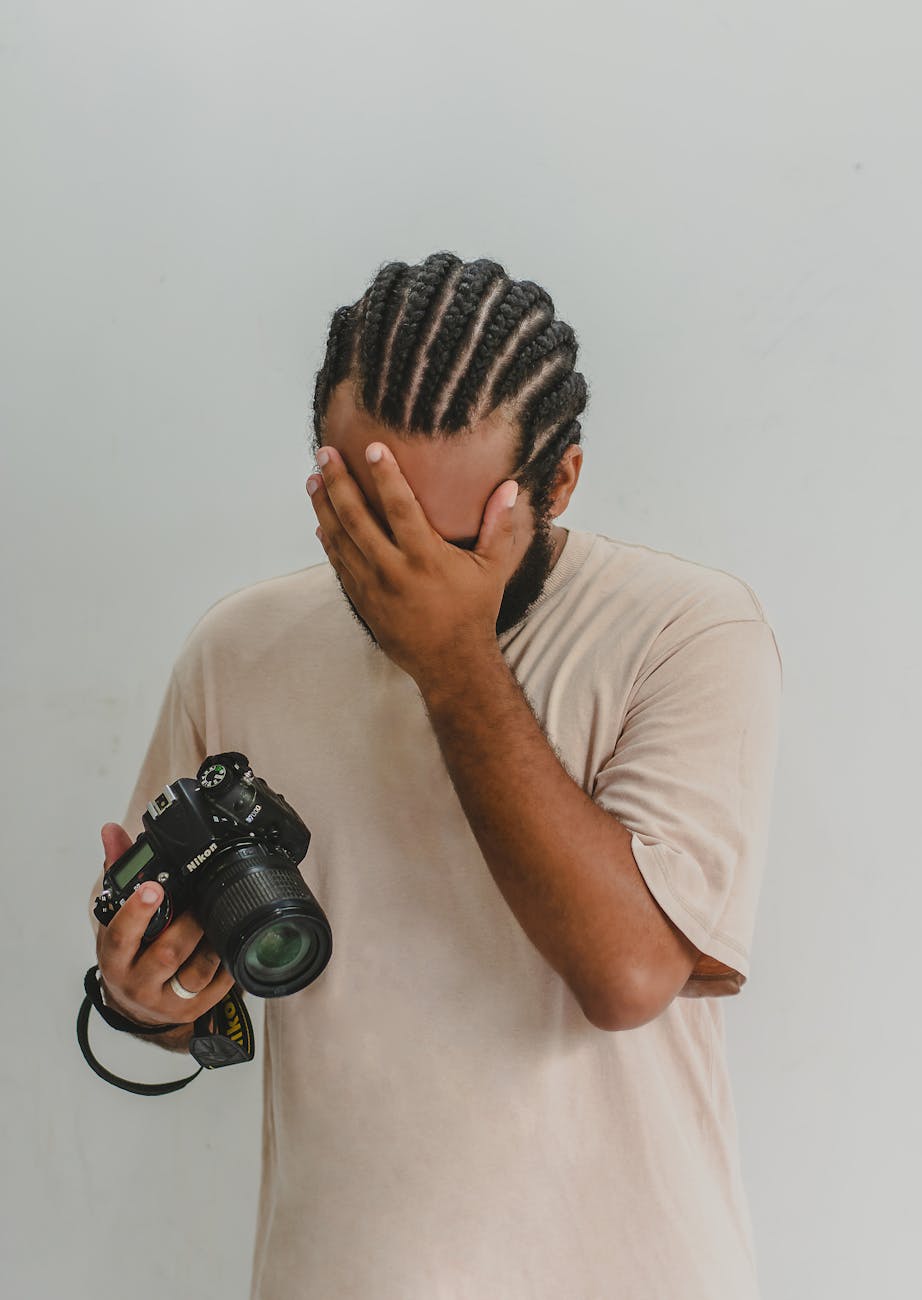
“Good enough” might be one of the most emotionally loaded phrases in photography.
It sounds like settling.
It sounds like lowering standards.
It sounds like something you say when you’ve given up on getting better.
And because photographers tend to care deeply — about quality, intention, and doing things well — the idea of accepting “good enough” can feel almost irresponsible.
But here’s the quiet truth that doesn’t get talked about enough:
Most photographers don’t stall because their standards are too low.
They stall because their standards are undefined.
And “good enough,” when understood properly, is not a lowering of the bar.
It’s a stabilizing one.
Why “Good Enough” Feels Uncomfortable in Photography
Photography sits at a strange intersection of art, skill, and identity.
Your photos don’t just represent what you know — they often feel like they represent you. Your taste. Your judgment. Your sensitivity. Your competence.
So when someone suggests that something might be “good enough,” it can feel personal in a way that’s hard to articulate.
If the photo isn’t great, what does that say about me?
This is why photographers often struggle more with self-acceptance than with learning new techniques. The emotional stakes are high, even when the learning stage is early.
“Good enough” feels like a threat when your sense of progress is tied to your sense of worth.
The Hidden Cost of Undefined Standards
One of the biggest sources of anxiety I see in early and mid-stage photographers is not lack of skill.
It’s lack of stopping points.
They don’t know:
-
when a photo is finished
-
when practice was successful
-
when learning for the day was sufficient
-
when improvement has “counted”
Without clear internal standards, every session bleeds into self-doubt.
You might take dozens of photos and still feel unsatisfied. You might edit for hours and still feel uncertain. You might practice regularly and still feel like it wasn’t enough.
That feeling doesn’t come from laziness or lack of care.
It comes from never deciding what “enough” looks like.
Why Perfectionism Often Masquerades as High Standards
Many photographers describe themselves as having “high standards.”
What they often mean is that they have moving standards.
The bar shifts depending on mood, comparison, or exposure to other people’s work. What felt acceptable yesterday suddenly feels weak today. What you were proud of last week now feels embarrassing.
That’s not high standards.
That’s instability.
Perfectionism thrives in instability because it never has to be satisfied. There is always another tweak, another comparison, another reason to hesitate.
And over time, that hesitation erodes confidence far more than imperfect photos ever could.
“Good Enough” Is a Decision, Not a Feeling
This is the part that surprises people.
“Good enough” rarely feels good in the moment.
It’s not a rush of satisfaction. It’s not relief. It’s not pride.
It’s a decision.
A conscious choice to stop, move on, and trust that learning will continue through repetition — not refinement.
Photographers who make progress long-term are not the ones who feel the best about their work every time. They’re the ones who know when to stop engaging with it.
Stopping is a skill.
Why Stopping Is So Hard When You’re Learning
When you’re still building confidence, stopping feels risky.
What if this is the moment I should push harder?
What if stopping means I didn’t try enough?
What if this photo could be better if I just keep going?
Those questions sound reasonable, but they hide a deeper fear: What if I don’t know enough yet to judge my own work?
That fear is understandable. Judgment develops slowly. But avoiding stopping doesn’t help judgment grow — it delays it.
Judgment is built by making decisions and seeing what happens next.
The Role of Repetition in Defining “Enough”
One photo cannot teach you what “good enough” means.
Ten photos can.
A hundred photos start to show patterns.
When you repeat similar work, you begin to see what actually matters and what doesn’t. You notice which changes improve results and which ones don’t move the needle at all.
That clarity comes from repetition, not perfection.
If every photo is treated like a final exam, repetition never gets a chance to do its work.
Why “Good Enough” Is Different at Every Stage
This is crucial.
“Good enough” for a beginner is not the same as “good enough” for someone ten years in.
And it’s not supposed to be.
Beginners often assume that accepting “good enough” early means locking in mediocrity. In reality, it creates the conditions for growth.
Early “good enough” might mean:
-
the exposure is reasonably close
-
the subject is clear
-
the photo communicates something intentional
That’s it.
If you wait for mastery-level results before allowing yourself to move forward, you’ll exhaust yourself long before you improve.
How Undefined Standards Feed Comparison
When your internal standards are unclear, you borrow other people’s.
You look at photographers you admire and unconsciously adopt their work as the benchmark — without accounting for experience, resources, context, or goals.
Suddenly, your “good enough” is measured against someone else’s highlight reel.
That’s not motivation.
That’s erosion.
Clear internal standards protect you from comparison by giving you something to stand on.
Why Systems Help Define “Enough”
This is where systems quietly support confidence.
Not systems that demand productivity or optimization — but systems that answer basic questions so your brain doesn’t have to.
What does a finished session look like?
What does a completed practice block look like?
What does “prepared” mean before a shoot?
When those things are defined, you stop second-guessing yourself constantly. You stop asking whether you did enough, because you already decided what enough looks like.
That clarity is incredibly calming, especially when confidence is still developing.
Professionalism Often Arrives Before Confidence
Here’s something I’ve noticed repeatedly.
Photographers often feel professional before they feel confident.
They show up prepared. They communicate clearly. They follow a predictable process. And even if they still doubt their skill internally, the structure holds them steady.
That steadiness matters.
It allows learning to continue without being derailed by constant self-evaluation.
This is why having clear prep, communication, and workflow systems can reduce anxiety even when skill is still growing.
Not because systems replace talent — but because they reduce emotional noise.
A Real-World Observation
I’ve worked with photographers who were technically capable but completely paralyzed by self-doubt. They couldn’t stop tweaking. Couldn’t finish projects. Couldn’t trust their instincts.
And I’ve worked with photographers whose work was still developing, but who moved forward steadily because they knew when to stop.
Guess who progressed faster?
Confidence doesn’t come from being perfect.
It comes from being able to continue.
“Good Enough” Is an Act of Self-Trust
Choosing “good enough” is not about lowering expectations.
It’s about trusting that learning happens through doing, not hovering.
It’s trusting that future photos will benefit from present decisions — even imperfect ones.
It’s believing that you don’t need to extract everything from one image to grow.
That trust builds slowly, but it builds reliably.
If You’re Struggling With This Right Now
If you find yourself stuck in endless tweaking, constant comparison, or the feeling that nothing is ever finished, pause before assuming it’s a discipline problem.
It’s usually a clarity problem.
Ask yourself:
What would “enough” look like today — not forever?
That answer can change over time.
And that’s okay.
A Gentle Perspective Shift
Photography doesn’t ask you to be flawless.
It asks you to keep showing up.
“Good enough” is not the end of caring.
It’s the beginning of sustainability.
And sustainability is what allows confidence to grow quietly, without burning you out.