
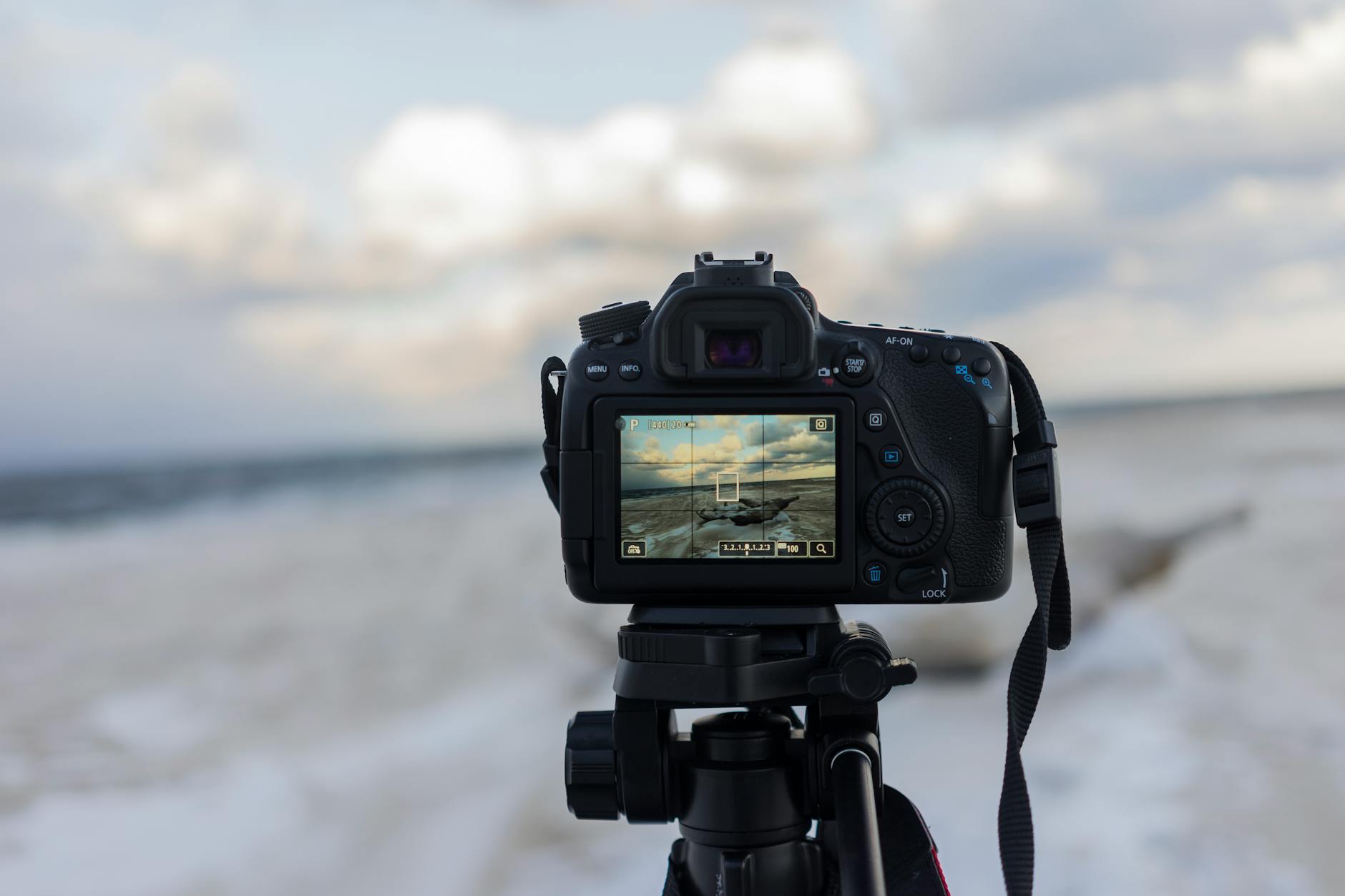
When someone starts photography, the first thing they usually feel is overwhelm. It’s that mix of excitement and “what the hell do all these buttons do?” mixed with the pressure of seeing everyone online posting perfect photos and acting like they mastered their camera in a weekend. And if you’ve ever spent time on YouTube searching for tutorials, you’ve probably noticed something: everyone overcomplicates things. Everyone dives straight into advanced settings, or they throw jargon at you like you’re supposed to understand it immediately. And as a beginner, that can be the fastest way to shut down before you even get started.
So let me say something clearly: you do not need to learn everything in your first year. You just need to learn the right things. You need a foundation — not a firehose of information. The basics aren’t boring; the basics are what make you unstoppable later. And the sooner you settle into the core skills, the sooner everything else becomes easier. Photography stops feeling random or lucky. Your photos stop feeling inconsistent. And you stop feeling like you’re guessing every time you pick up your camera.
Your first year is all about developing the skills that give you control. And control is what creates confidence. Not in an “I know everything” way, but in a “I understand what’s happening and how to fix it” way. That’s the quiet superpower new photographers don’t realize they need. And that’s exactly what we’re going to build here, slowly and intentionally, without the pressure, without the perfectionism, and definitely without the unrealistic expectations the internet loves to promote.
Let’s start with the first thing that every beginner struggles with: understanding that your camera is simply a tool. It’s not the magic. It’s not the reason your photos look good or bad. It’s not the thing that makes you creative. It’s the device that records the choices you make. Think about that for a second. You decide the intention. You decide the story. You decide the light. The camera just captures the result. When you shift from feeling like the camera has the power to realizing that you have the power, everything changes. You stop being intimidated by the screen or the dials. You stop apologizing for not knowing everything yet. And you start focusing on the real skill: learning how to see.
But yes — before we get to the artistic side, there are still basics every photographer needs to master. And the first year is the perfect time because your brain is fresh, curious, open, and not stuck in bad habits yet. The goal is not to become advanced. The goal is to become capable. Capable photographers create beautiful work because they understand what’s going on when they press the shutter. And when something goes wrong (because it will), they know how to fix it without panicking.
So what exactly should you focus on during your first year? You should focus on understanding how your camera sees light. You should focus on how shutter speed, aperture, and ISO work together, not as separate ideas, but as one connected system. You should learn how light affects everything — mood, sharpness, color, emotion, storytelling. You should get comfortable with focus and consistency. You should learn how to hold your camera so your images are sharp. And you should learn the beginning stages of composition, not as a rulebook but as a way to help your viewer understand what they’re supposed to pay attention to.
Let’s start with exposure, because exposure is the heartbeat of photography. Exposure is really just a fancy word for how bright or dark your image is. But beneath that simple definition is a deeper idea: exposure is about control. When you understand exposure, you begin to see your camera as something predictable, not mysterious. Exposure is made of three parts working together — aperture, shutter speed, and ISO — but instead of treating them as three separate settings, think of them as three friends holding hands. If one moves, the other two react. They are connected, always affecting each other, always influencing the image in their own unique way.
Aperture controls depth of field — how much of the image is sharp or soft. A shallow depth of field gives you that soft, blurry background every beginner loves because it feels cinematic, dreamy, professional. A deep depth of field keeps everything sharp, which is useful for landscapes, group shots, or anything where the details matter. But beginners often only think of aperture as “blurry background vs. not blurry background,” and they forget that aperture also controls the amount of light coming in. When you open your aperture wider (a lower f-number), you let in a lot more light. When you close it down (a higher f-number), you let in less. Understanding that one change affects the others is one of the first big “aha” moments new photographers have.
Shutter speed controls motion. It decides whether your image freezes a moment or shows motion blur. If your shutter is too slow and your subject moves even slightly, you get a blurry image — and beginners often blame themselves or blame their camera, when in reality, it’s simply a shutter speed issue. Once you understand that the camera doesn’t judge movement the way our eyes do, you start setting your shutter speed intentionally instead of guessing. And yes, shutter speed also affects how much light enters the camera. A fast shutter speed lets in less light; a slow shutter speed lets in more. Again — connected.
ISO is the sensitivity of your camera’s sensor. A low ISO gives you clean images with no grain. A high ISO helps you shoot in dark situations but adds noise. And while noise isn’t the enemy that the internet makes it out to be, understanding ISO helps beginners stop thinking low light = bad photo. Low light simply means you have to shift the other settings. ISO gives you the flexibility to do that.
When beginners understand exposure as a triangle — but more importantly, as a relationship — they gain control. And when you gain control, you start experimenting. You stop worrying about whether you’re “doing it right,” and you start asking:
“What do I want this image to feel like?”
That question is where creativity begins.
Next, let’s talk about light. Light is everything. If exposure is the camera’s heartbeat, light is the soul of the photograph. Beginners often assume that more expensive gear will fix their images, but it’s usually just the light. When you learn to observe light — its direction, its softness or harshness, its color, its mood — you start to anticipate how your images will look before you even lift your camera. You begin to see the world differently. You notice how window light wraps around a face. You notice how harsh midday sun creates deep shadows and squinty eyes. You notice how golden hour feels warm and forgiving, while blue hour feels calm and quiet.
Mastering light isn’t about memorizing rules. It’s about spending time seeing. Hold your hand in front of a window and watch how the shadows shift. Look at the reflection on someone’s cheek when they turn toward or away from a light source. Photography isn’t just clicking; it’s observing. And beginners who train their eyes earlier grow faster and produce stronger images long before they understand more advanced concepts.
Speaking of growth, let’s talk about focus. Focus is the thing that can make or break a beginner’s confidence. Nothing is more frustrating than a beautiful moment that turns out soft. But focusing is a skill — not luck. Mastering autofocus starts with choosing a single focus point instead of letting the camera guess. Cameras aren’t mind readers. They don’t know if you’re trying to focus on the eyes, the hands, or the background. You tell it. Once you learn that control, your images instantly become sharper and more intentional.
Then there’s composition. Composition isn’t about memorizing rules like the rule of thirds or leading lines. Composition is about guiding the viewer’s attention. It’s about clarity. It’s about deciding what matters in your photograph and making sure everything else supports that decision. Beginners often treat composition as a checklist, but it’s really a language. You’re telling the viewer, “Look here first.” You’re communicating emotion through shape, space, framing, and balance.
But the biggest part of your first year isn’t one single skill — it’s repetition. Growth happens when you shoot consistently, not when you binge-learn ten tutorials in a row. Pick up your camera a few times a week. Photograph your dog, your kids, your coffee mug, your plants, your neighborhood. You’re not trying to build a portfolio yet — you’re training your brain. You’re learning how the camera reacts. You’re learning what settings feel comfortable in your hands. Every time you shoot, you say to yourself, “Oh, that makes sense,” a little more.
And here’s the most important part: give yourself permission to not be perfect in your first year. Give yourself space to experiment and fail and try again. Photography is not a race. Photography is a relationship between you, your camera, and the world around you. Relationships take time. They deepen slowly. And if you commit to mastering your basics this year, the photographer you become in 2026 will feel steady, grounded, and confident — not overwhelmed and unsure.
That’s the real magic of your beginner year.
When you focus on the right things — the basics — everything else becomes easier.